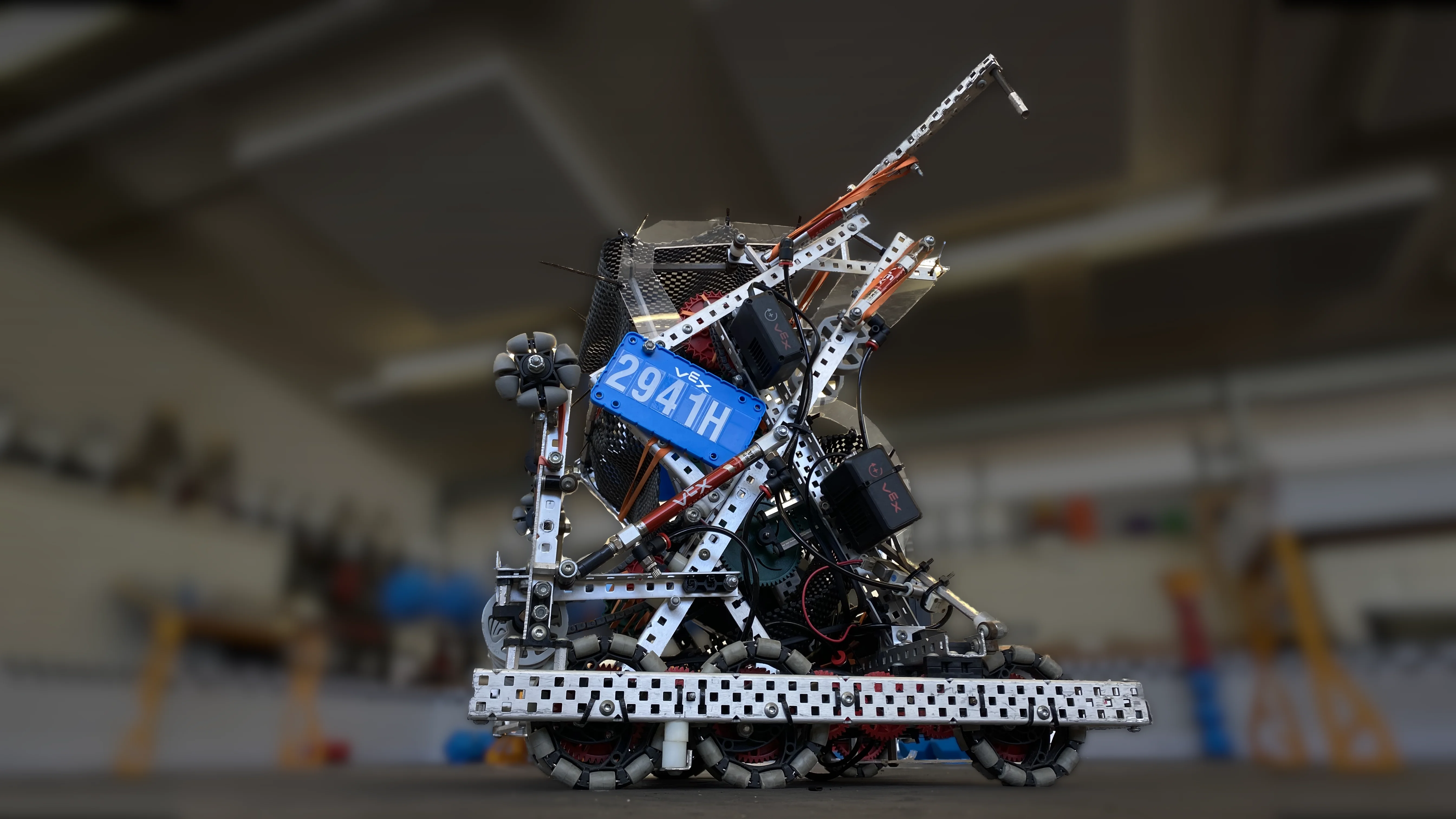
2941H
Mecha Squad

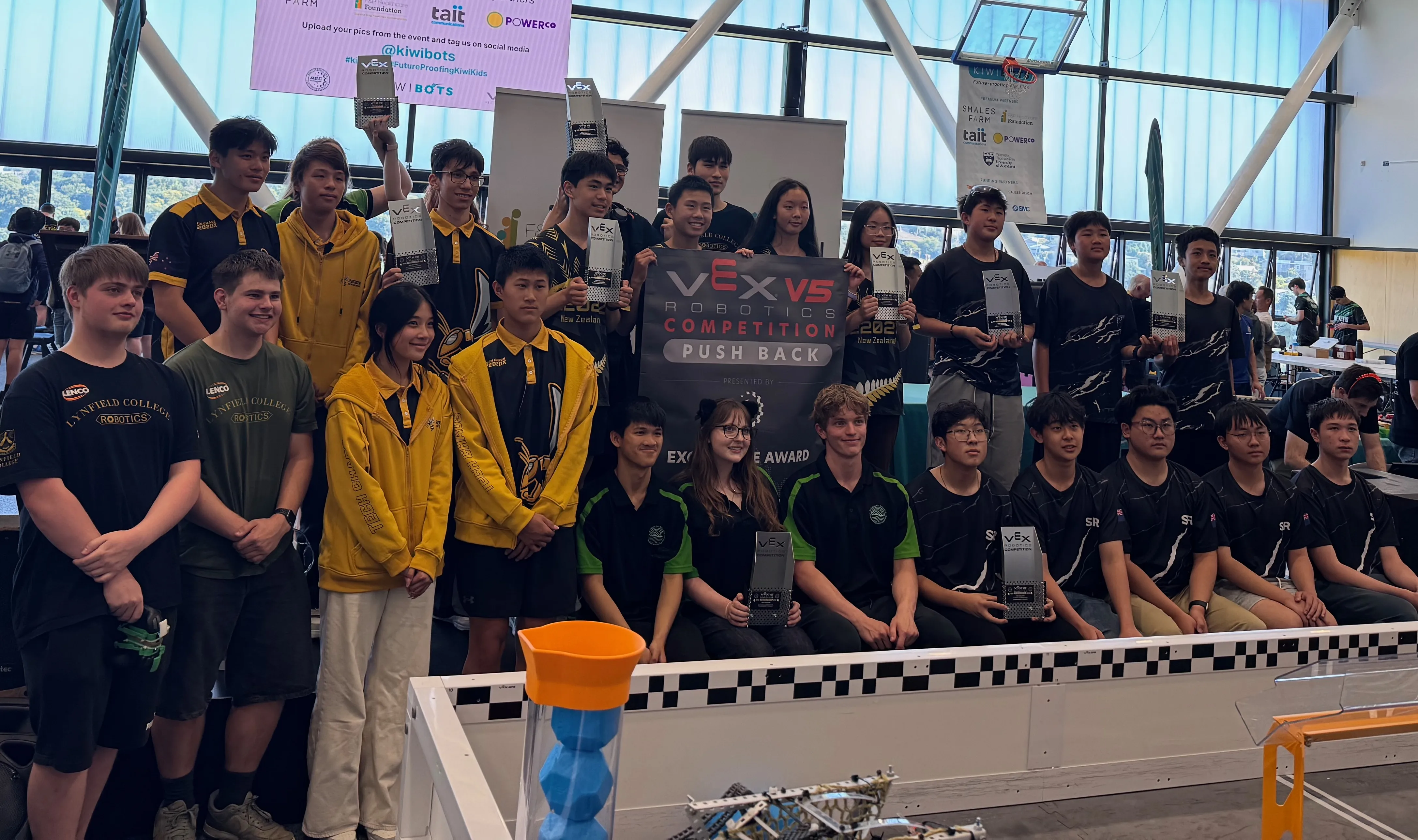
We Qualified for the World Championships
The 2026 VEX Robotics World Championship represents the pinnacle of the competitive robotics calendar for teams, bringing together thousands of the world's top qualifying students in St. Louis, Missouri, USA at the America's Center Convention Complex. Taking place the 21st-24th April, this multi-day event showcases the best student-designed robots from over 60 countries, making it one of the largest secondary school robotics competitions. Teams competing at Worlds have earned their place through strong performances at local, regional, and national championships throughout the season.
Qualifying for the World Championship is a prestigious achievement that recognizes months of dedication, innovation, and competitive excellence. For students, it represents the highlight of their robotics career, and a chance to test their skills against the very best in the world before potentially transitioning to university studies or careers. The event celebrates not just winning but also design excellence, sportsmanship, and strategy.
What is vex robotics?
 ?
?The VEX V5 Robotics Competition (VRC) is one of the world's largest and most prestigious competitive robotics programs for secondary schools. VRC engages millions of students across 60+ countries, making it a truly global STEM initiative. The competition challenges student teams to design, build, program, and drive robots to compete in annual game challenges.
Each VEX Robotics season features a unique game challenge that is revealed globally at the start of the competition year. Matches are played on a 12-foot by 12-foot field, with two alliances (red and blue) competing against each other, each alliance consisting of two teams working collaboratively. Every match is divided into two distinct periods: a 15-second autonomous period where robots operate entirely on pre-programmed code without any driver input, followed by a 1-minute 45-second driver-controlled period where students operate their robots using handheld controllers. Points are scored through various game-specific tasks, which typically involve manipulating game objects such as balls, rings, cubes, or other elements into goals, zones, or stacking configurations. Additional points can be earned through autonomous bonuses and end-game objectives. Robots must adhere to strict size constraints (typically an 18-inch cube at the start of the match) and can only be built using official VEX V5 components.
About Us





Achievements
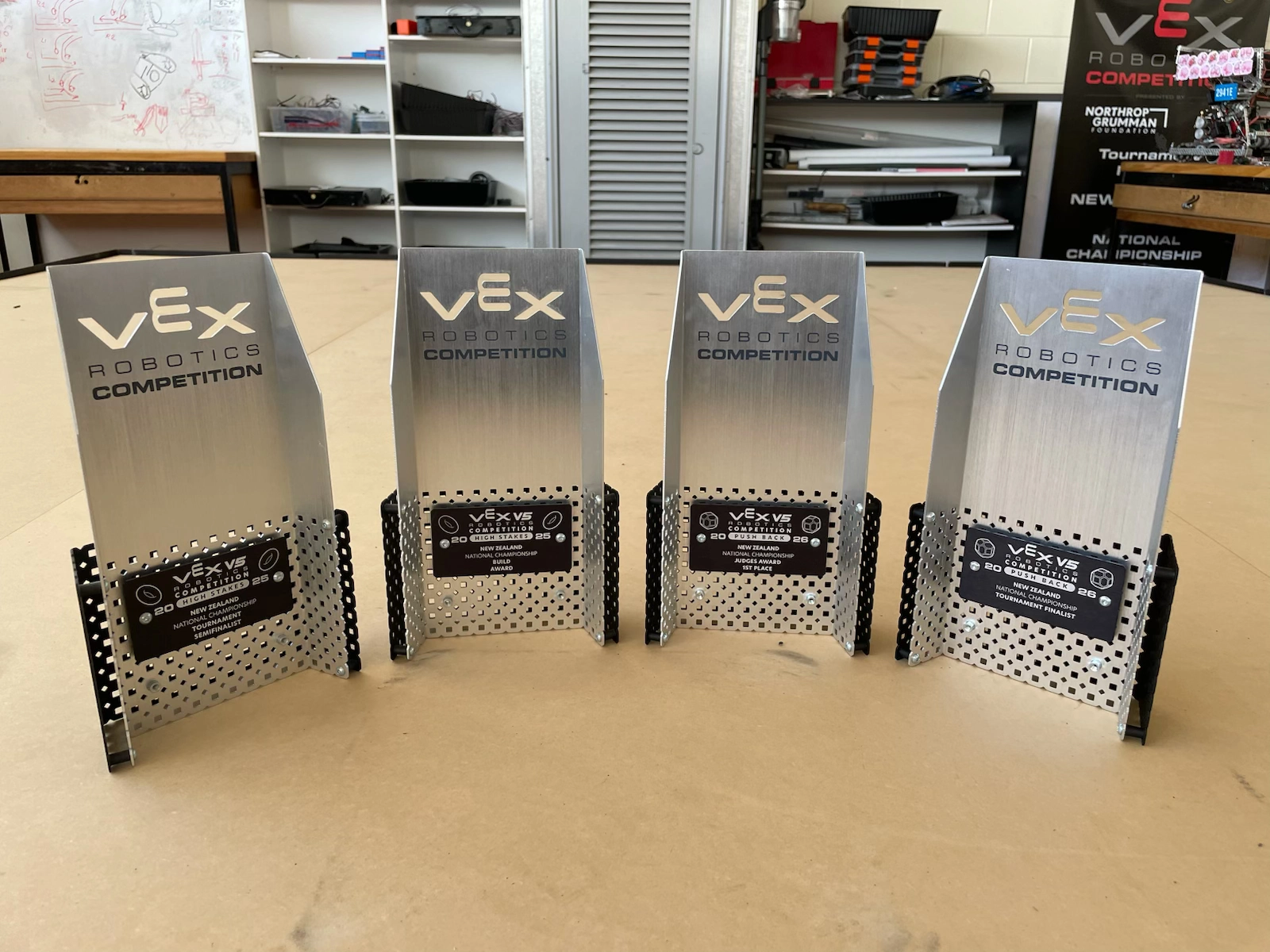
This season we had our best season yet and achieved several major milestones. Some of our proudest ones are:
- Qualifying for the World Championship
- Winning the tournament finalist and the 1st judges award
- Ending the New Zealand season with a 38 win 10 loss record for a 79.2% winrate
- Reaching the finals at all 4 of the tournaments we attended and winning 2 of them
Sponsor Us!

Getting a team of students from Tauranga to St. Louis is expensive. The cost is approximately $7000 NZD a student including a $1800 USD registration. Every dollar brings these students one step closer to the world stage.
Donations will go directly to helping students fundraise and pay for:
- Return flights from New Zealand to St. Louis
- Official tournament accommodation
- Registration and competition entry fees
- Robot equipment costs
Design Process
Our Engineering Notebook
VEX robotics follows a very similar design process to engineering applications and any competitive event. Following the trend of wide iterations and creative design in the early season, where teams around the world work together to find mechanisms and strategies that are effective. Then flowing into mid-seasons, where general principles are defined but applications are widely varied. Then, finally, into the late season, where there are defined “metas” and robot designs, and the focus shifts towards optimisation and finding new mechanisms that give the slightest edge. VEX has a unique community of sharing knowledge and robots functionality to the whole world in order to further the competitions as a whole, if you were to google vex robotics explanation you'd be able to find building guides as well as breakdowns of peoples late season bots.
Our team understands this and follows a multi design cycle philosophy, we will typically go through three to four full design cycles a year with each usually consisting of fully CADing the robot on fusion 360, and then a full rebuild. This process is documented in our engineering notebook which consists of all plans and ideas that we have throughout the season along with building progression and process.
About Oats Robotics